Ethnographic expedition to Zambia, single departure 2026.
In the extreme west of Zambia, near the town of Zambesi, the historic ceremony of the Likumbi Lya Mize of the Luvale people is perpetuated in August. It is the concluding part of the complex Mukanda initiation rite, a three-month training to adult life, of young adolescents who are also circumcised. The ceremony is accompanied by the coming out of a multitude of Makishi masks with their dances, declared Intangible World Heritage by UNESCO in 2008.
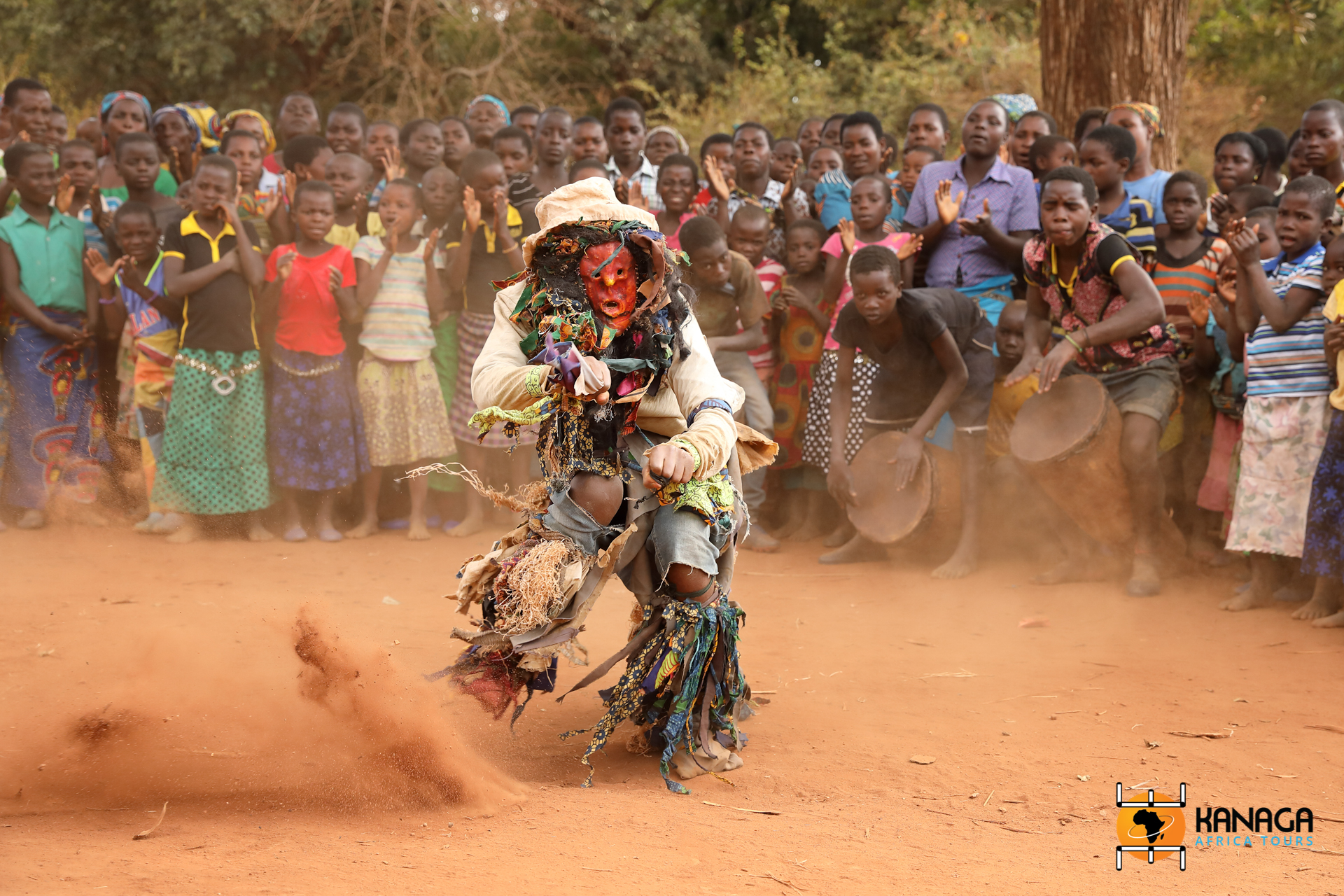
Mize is the name of the village that hosts the traditional Luvale court, not far from the town of Zambezi. The Makishi dancers and their beautiful, large masks impersonate the spirits of the ancestors who accompany each initiate in his or her training. At the beginning of the Mukanda, the young people are escorted by the masks and the women towards the river, symbolising the passage to the Hereafter, since they will die as children and resurrect after their training in a secret and isolated place, returning to the world of the living as adults, on the day of the Likumbi Lya Mize. The ceremony thus celebrates a kind of collective resurrection, in which hundreds of different Makishi masks/spirits accompany the young initiates towards the town of Zambezi and the court of Mize, shouting and making incomprehensible sounds, amidst dances and songs, colours and dazzling rhythms, welcomed by the community and festive mothers.
The Kulamba ceremony takes place at the end of August and attracts all the Chewa tribal chiefs, spread across Zambia, Malawi and Mozambique, to pay homage to the Paramount chief Kalonga Gawa Undi and celebrate the history and heritage of their people.
All Chewa tribes from all corners of the kingdom gather between Katete and Mkaika showing off their culture through ceremonial dances and songs.
Among the various dances and masks, the most notable are the Gule Wamukulu (Nyau), Gologolo, Makanja, Muganda, Chinamwali and Chimtali (women’s dance). The Nyau masks, popularly known as Gule Wamukulu, perform the most popular and expected dance among the Chewa people.
The Nyau dance (Gule Wamukulu) has been officially recognised and protected by UNESCO since 2006. Nyau dancers masquerade as vilombo (animals) and embody the spirits of the ancestors and the earth. The Nyau dances are diverse and numerous, depending on the spirits they embody (there are more than 30 different spirits within the ceremony and each characterised by different masks, dances and songs).
The Kulamba ceremony also includes the rites of passage of young women into adulthood: the anamwali (young women) are confined to a secret area where they learn the arts and responsibilities of being a woman, and during the ceremony they are introduced back into society as adult women.